HISTORY | DISTILLERY | PRODUCT | TOUR GUIDE | WHERE TO GET IT
© 2002 Buffalo Trace Distillery, Franklin County, Kentucky
Cigars
What better way to enjoy a premium cigar than with a glass of Buffalo Trace Kentucky Straight Bourbon Whiskey. Fine, hand-rolled tobacco, cured in the traditional manner, is the perfect complement to our whiskeys complex aroma of vanilla, mint, molasses and its pleasantly sweet flavor containing notes of brown sugar and spice.
Like our premium whiskey, cigars represent a testament to a time-honored tradition drawing on centuries-old production methods and exquisite craftsmanship. And like our premium whiskey, there is a heritage behind each premium cigar brand that tells the story of a people, the land and its legacy.
Please visit The BT Cigar Room each month to review of some of the worlds finest cigars, cigar trivia, a ranking of preferred brands and a look at the history of prominent manufacturers. In addition, youll find a changing inventory of links to premium cigar websites. Use these links to acquire your favorite cigars, and take advantage of a special purchase price, compliments of Buffalo Trace Distillery.
We hope you enjoy your visit to The BT Cigar Room.
A Brief Lesson In Cigars
According to western history books, the first recorded observation of people smoking tobacco occurred when Christopher Columbus sent two explorers inland from one of his landing sites in the New World. The men returned with fantastic tales...including a story of Indians with smoking heads Less than 50 years later, in the mid-1500's, tobacco was already a valuable commodity in global trade.
Today, tobacco is grown throughout the world. Cigar tobacco includes special varieties that require careful tending. If the leaves are intended for wrappers, the special growing process includes large tents for a shade-grown variety and careful harvesting to avoid blemishing the leaves. The best cigar tobacco is concentrated in the Tropics, but for wrapper tobacco there is one notable exception: the Connecticut River Valley of the United States.
Given the genetic stability of tobacco, the seeds from tobacco plants remain genetically pure from generation to generation, if properly tended in the field. Therefore, a Cuban seed plant in the Dominican Republic will appear genetically identical to one from Cuba. The difference in strength and flavor comes from variations in soil and climate.
Our Distillery
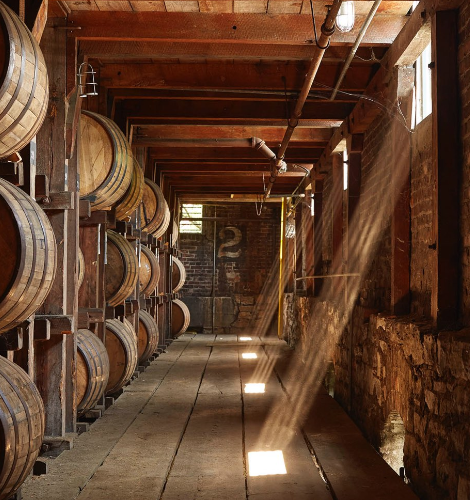
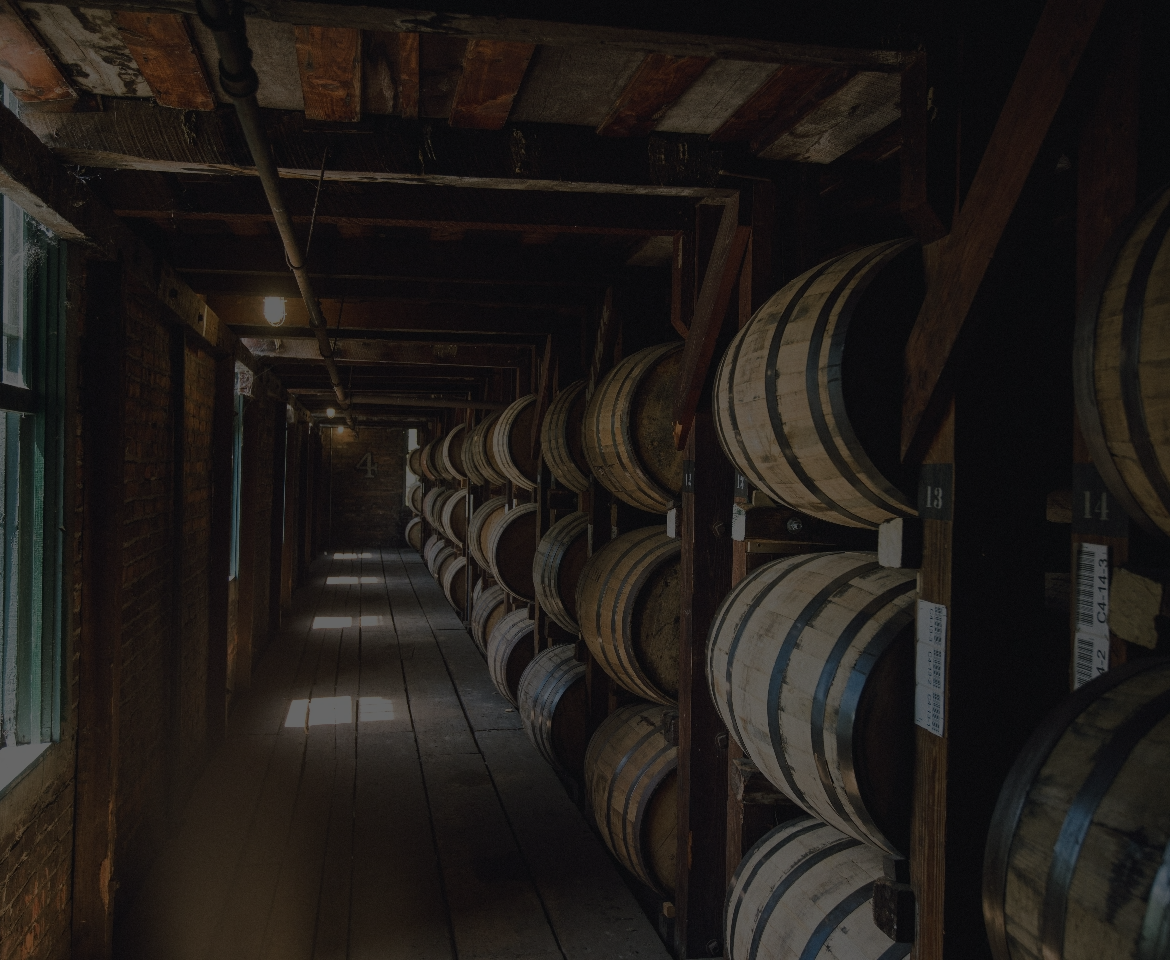
Buffalo Trace Distillery provides for the complete production of bourbon whiskeys. All bourbon produced by the distillery is aged in century-old warehouses. Constructed of massive wood beams and covered by a brick shell, these structures allow the alternating cooling and warming of Kentucky's four distinct seasons to mature the bourbon by nature's timetable.
Steam pumped throughout the warehouses during the extreme cold of winter compensates for the dramatic drops in temperature and gives the whiskey additional cycles in and out of the wood. This makes for a more balanced bourbon, as the liquid is able to take additional advantage of the natural sugars occurring in the charred barrels. The distillery was the first to use this method of aging in 1859 and has been doing so ever since.
Buffalo Trace's warehouses were built in the 1900s (some as early as 1903) and represent a variety of architectural styles. The differing styles of warehouses, and their location on the property, contribute to the significant differences in the whiskey coming from each. Within each warehouse, certain floors produce better whiskey than others do. For example, the fourth and fifth floors of Warehouse C and the fourth through sixth floors of Warehouses I and K produce our absolute best whiskey. Consequently, these locations have been reserved exclusively for making Buffalo Trace Kentucky Straight Bourbon Whiskey.
For more information see our Unique Facts Section.
Our Hospitality
Buffalo Trace Distillery is open to visitors. Click here to see our distillery tour.
The Clubhouse also houses a Reception Hall that is available for private meetings and parties.
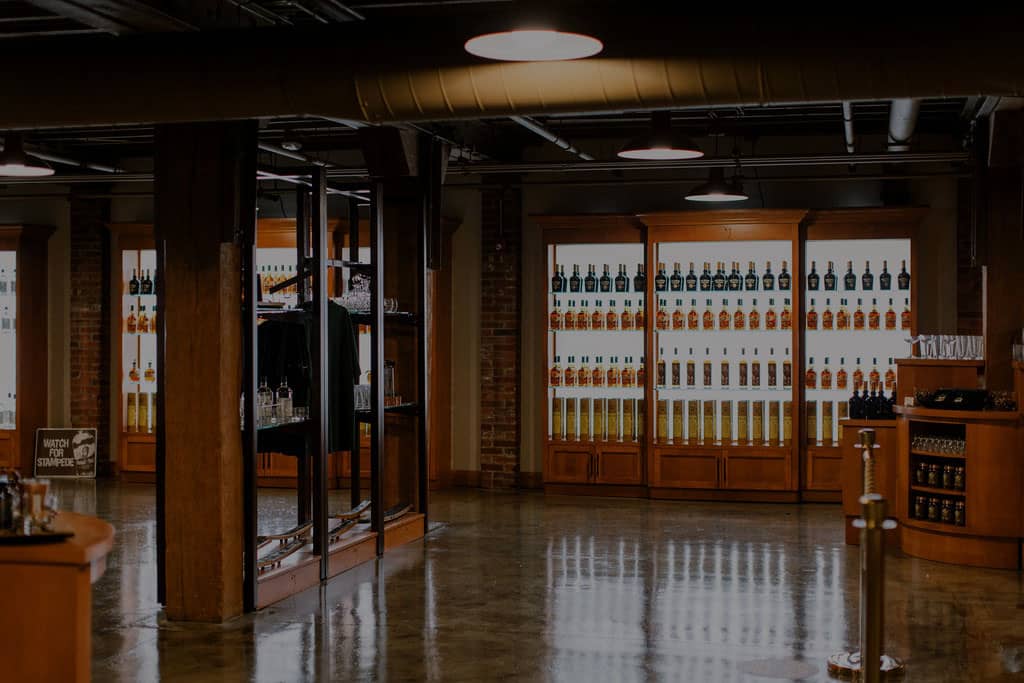
The distillery also has a gift shop filled with fine, handmade Kentucky crafts and unique gift items. The gift shop is open from 9 a.m. to 3 p.m. and accepts major credit cards.
Call or visit the Buffalo Trace Distillery today.
Buffalo Trace Distillery
1001 Wilkinson Boulevard
Franklin County, Kentucky 40601
502-223-7641 or toll free, 800-654-8471
From 1-64 East, take exit 53B to US-127 North.
Follow US-127 North to US-421 South (Wilkinson Boulevard); turn left onto US-421 South.
Distillery is approximately 1.25 miles on left.
From I-64 West, take exit 58 to US-60 West to US-421 North and follow to distillery.
Buffaloes...
As the mighty buffalo thundered across the land, they carved paths in the wilderness and a destiny for our ancestors. These paths, known as traces, were soon marked with the footprints of adventurers, explorers annd pioneers as they made their journey to the west.
One such trace, called the Great Buffalo Trace, led to the rugged banks of what is now called the Kentucky River. It was here in Franklin County, just a short distance from KentuckyÕs state capitol of today, that millions of buffalo found passage across the river in their move toward the Great Plains.
The migration of these herds left a rough wide clearing that would become a gateway to a new frontier that invited renowned explorers and pioneers, such as George Rogers Clark and legendary Daniel Boone, and countless settlers who pushed America westward more than 220 years ago.
The McFee brothers made the first survey of the crossing site and the surrounding area in 1773. A settlement came into existence at the crossing in 1775, when brother Hancock and Willis Lee established their camp with a small company of men.
The group fought for survival in the unforgiving conditions of a fierce wilderness, but by 1789 the area held a thriving population.
...and Bourbon
Those who settled there were quick to take advantage of the abundant limestone spring water and fertile bottom loam-found to be perfect for growing exceptional grain. Distillation soon followed and what would become the area's distinguished bourbon heritage took root.
The tradition of fine bourbon making has been a part of this site's heritage for more than two centuries. In fact, there has been a working distillery on the grounds since 1787.
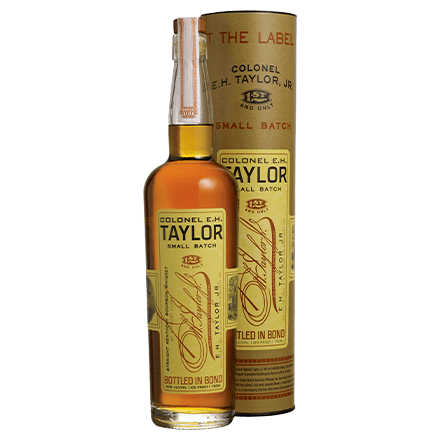
The first modern distillery was built on this site in 1857 and was the first to incorporate the use of steam powera major advance in producing high quality bourbon. The distillery was later purchased by E.H. Taylor, Jr., one of Kentucky's original Bourbon aristocrats. Astute and innovative, Taylor brought advancements to the facility as well as to the entire whiskey industry. By 1886, the distillery had introduced the nation's first climate-controlled warehousing for aging whiskey and had earned a worldwide reputation for producing America's finest bourbons.
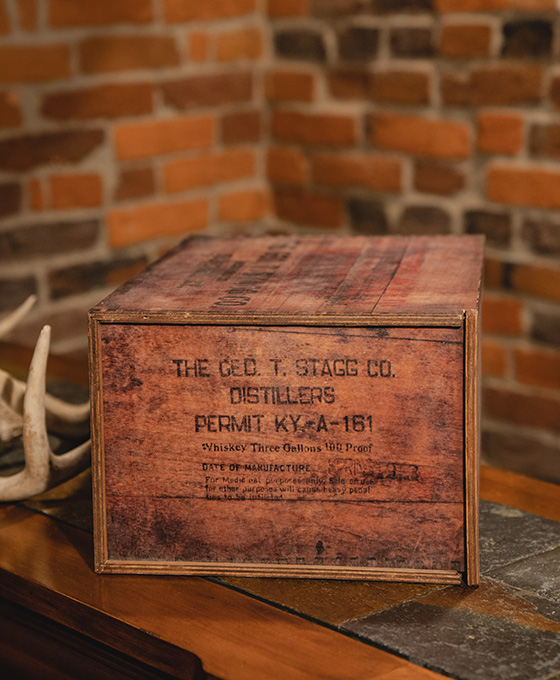
During the prohibition era, the distillery's existence was spared by the allowance of a permitone of only four issued in the countryto continue distillation for medicinal purposes. After Repeal, Albert Blanton took over the operation of the distillery and added many quality control enhancements. An innovator in his own right, Blanton enjoyed producing single-barrel bourbon for himself and his friends. This tradition was honored in 1984 when the distillery became the first to commercially market a single-barrel bourbon.
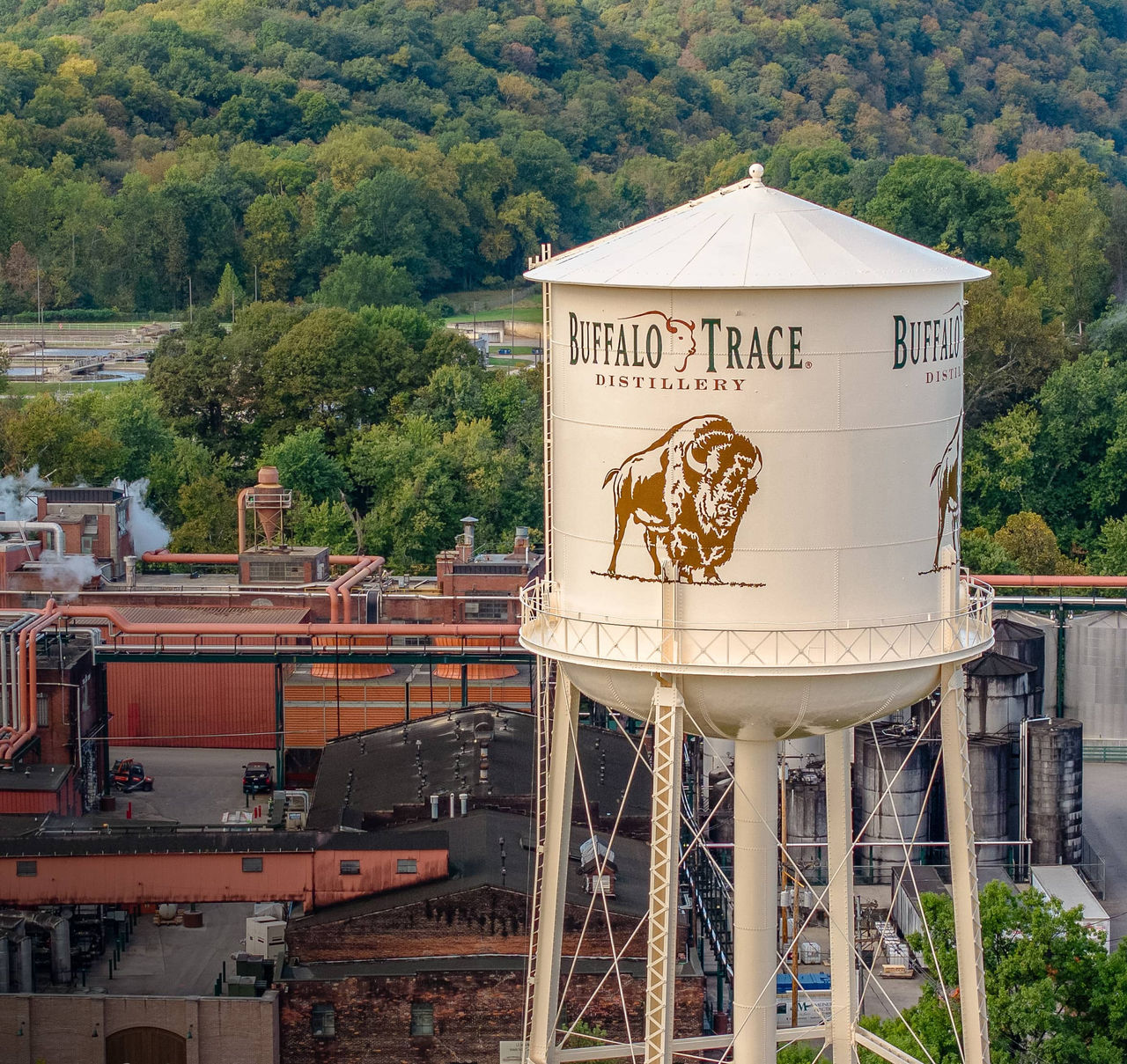
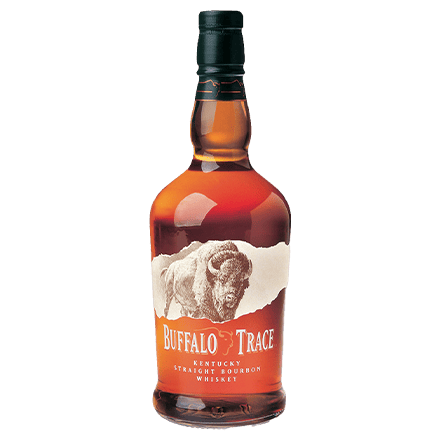
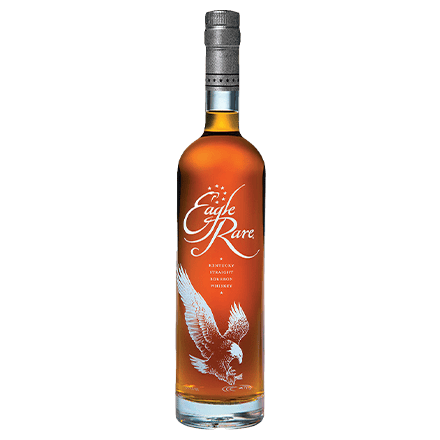
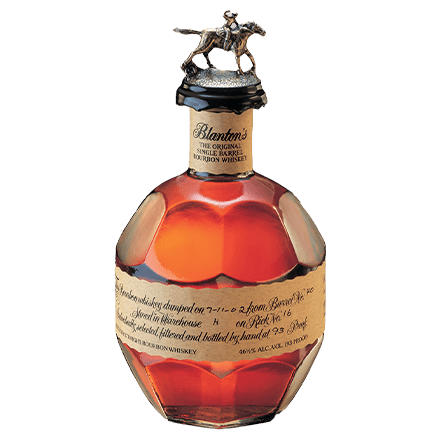
Today the Buffalo Trace Distillery site encompasses 110 acres and 110 buildings. Formerly the Leestown Company, the distillery was renamed in June 1999 and introduced its flagship bourbon, Buffalo Trace Kentucky Straight Bourbon Whiskey, in August 1999. In addition to Buffalo Trace Kentucky Straight Bourbon Whiskey, the distillery has a history of other finely crafted, award-winning spirits, including Blantons, Rock Hill Farms, Hancocks Reserve, and Eagle Rare. The distillery has won more international awards in the last decade than any other North American distillery, earning more than 40 top distinctions in national and international competitions.
For more information see our Adventurers Diaries section.
The Grain
Buffalo Trace Kentucky Straight Bourbon Whiskey is expertly crafted in the time-honored tradition unique to bourbon. Buffalo Trace begins with the finest Kentucky and Indiana corn, selected rye, and superior malted barley. Together, these grains represent our unique mash billa trade secret known only by those craftsmen responsible for producing this highest-quality whiskey.
Upon delivery the grains undergo a general visual inspection for any obvious abnormalities. Bushel weight is then checked to ensure the grain demonstrates the proper baseline characteristics. Finally, a sample of the grain is tested in the distillery laboratory to determine if it meets Buffalo Trace's rigid standards for moisture levels and chemical balance.
The Milling
To prepare the newly received grains for the mashing process, they must first be carefully milled to exactly the right specifications. Grains at Buffalo Trace are milled with a hammer mill using a screen that only allows particles of milled grain as large as 10/64 of an inch in diameter through. In our experience, we have found that this size screen, called a #10, lets more of the true grain through to be part of the mash without compromising the integrity of the mash itself. The next larger screen would allow whole kernels of rye and barley through, and the next smaller screen would create too fine a grain, causing the mash to become too thick.
The Mash
Mashing waterfresh and rich with minerals from its natural filtration through Kentucky limestoneis heated in a steam-generated pressure cooker. Once the water reaches the proper temperature, the corn is cooked under pressure until it is ready for rye to be added. After the addition of the rye, a malted barley slurry is added to the mixture, which allows its activated enzymes to turn the starch from the cooked grains into a soluble sugar. The new mixture is, at this point, a sweet mash
Fermentation
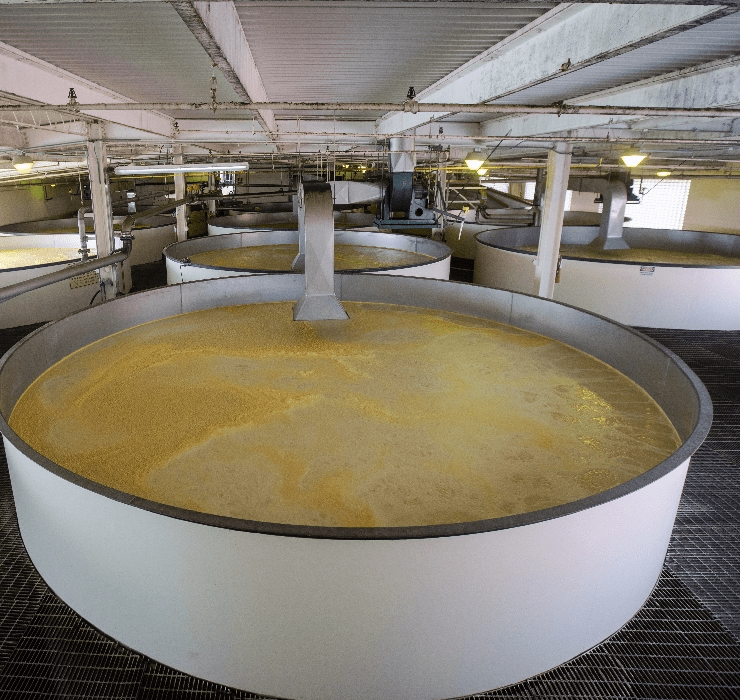
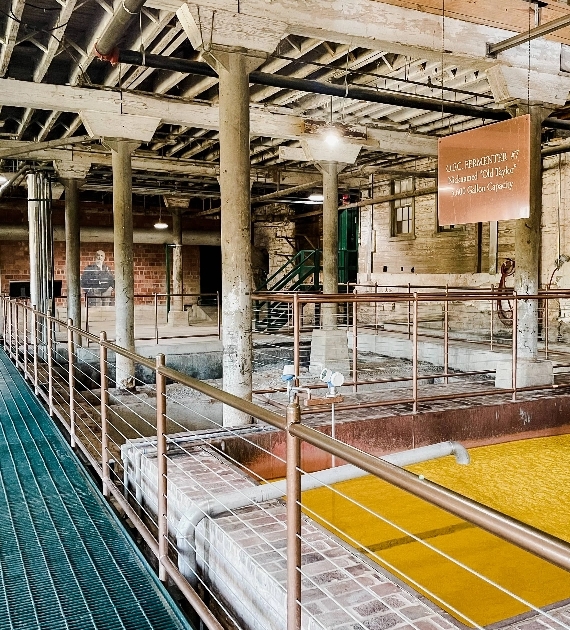
This part of the process takes place in our 12 fermenters with each fermenter holding 89,962 gallons; they are the largest in the industry. After the mash has cooled, yeast is added with a small amount of the previously fermented and distilled mash, also known as sour mash. The sugar present in the mash feeds the yeast to produce alcohol and carbon dioxide. The uniquely rich nutrients of the pure Kentucky limestone water used in this process also enrich the yeast. Buffalo Trace Kentucky Straight Bourbon Whiskey undergoes a natural fermentation lasting anywhere from three to five days.
The Distillation Process
The fermented mixture, or beer, complete with solids, enters the top of the beer still and descends through plates, similar to those in a coffee percolator. Steam, pumped in from the bottom of the still, encounters the falling beer, creating an alcohol-rich vapor. The vapor is then recondensed and passed through a second still, known as a doubler, to create a crystal clear liquid that, by law, can be no more than 160 proof, or 80% alcohol by volume. For Buffalo Trace Kentucky Straight Bourbon Whiskey, however, the final liquid is removed from the doubler at a significantly lower proof in order to preserve more of the flavor and characteristics of the grains. This liquid, which is commonly referred to as raw spirit or "white dog," is then entered into newly charred, virgin white oak barrels. Consistent with our desire to optimize flavor and characteristics of the grains, we enter the white dog into the barrels at 125 proof.
The Barrels
Before Buffalo Trace Kentucky Straight Bourbon Whiskey is placed into barrels, the barrels themselves undergo a rigid inspection. Barrels to be used for Buffalo Trace Kentucky Straight Bourbon Whiskey must be made of naturally aged, "center ring" wood from trees typically 70 to 80 years old. This center ring falls between the outer ring, called sapwood, and the core of the tree. Our standards for wood selection are more expensive, but they make for a finer whiskey. Also, the grain of the wood is inspected for coarseness. Very fine wood grain results in immature whiskey that is weak and less flavorful. Grain that is too coarse leads to an excessive wood taste. Barrels also are reviewed for broken or cracked staves and open joints. As a result of these criteria, Buffalo Trace Distillery has the highest rejection rate of barrels in the industry.
The Aging
While every step of the production process is important, Buffalo Trace Distillery believes the aging process is the greatest factor in producing truly outstanding whiskey. The Distillerys best whiskey comes from aging in Warehouses C, I and K, and only on selected floors. For instance, the fourth and fifth floors of Warehouse C and the fourth through sixth floors of Warehouses I and K produce the distillerys finest whiskey. These floors represent the middle floors in each of the warehouses and have the greatest temperature changes in the course of a yearthe key to reaching full maturity and producing a balanced whiskey. Warehouses C, I and K also are rick warehouses constructed from large wood beams and surrounded by a brick shell. Each of the warehouses has an earthen floor, which best allows nature to do its part in the aging process and produce truly outstanding whiskey. Additionally, steam pumped throughout the warehouses during the extreme cold of winter compensates for the dramatic drops in temperature and gives the whiskey additional cycles in and out of the wood.
The Selection
Only the best bourbon produced by the distillery is bottled as Buffalo Trace Kentucky Straight Bourbon Whiskey. Approximately 30-35 barrels of aged whiskey are selected from the middle floors of Warehouses C, I and K. Samples from these barrels are reviewed by the distillerys tasting panel. If any one taster rejects a sample, the barrel it represents will not be used for Buffalo Trace Kentucky Straight Bourbon Whiskey. Only the barrels of approved bourbon samples (usually no more than 25-30 barrels) will be married and bottled as Buffalo Trace Kentucky Straight Bourbon Whiskey.
The Filtration
Whiskey from selected barrels is married and passed through a chill filtration process, lowering the temperature of the bourbon to below 30°F (-1ºC). This process ensures that more of the color and flavor naturally present in the bourbon is maintained than does filtering through activated charcoal. The bourbon is then reduced to 90 proof, its bottling proof (45% ABV), using water that has undergone reverse osmosis filtration. Buffalo Trace Distillery was the first distillery to use this process, which is regarded as a benchmark within the industry for producing the highest quality bourbon. Reverse osmosis water begins as pure Kentucky limestone water that is placed in a tank containing a double-sided filter. This filter is cycled through the water, removing all the minerals and producing the purest form of water obtainable.
No other colors or flavors are added to the final product, a claim only bourbon, among all whiskeys, can make. Buffalo Traces proprietary bottles are then carefully filled, corked and sealed by hand, and then packed for limited distribution.
The Taste
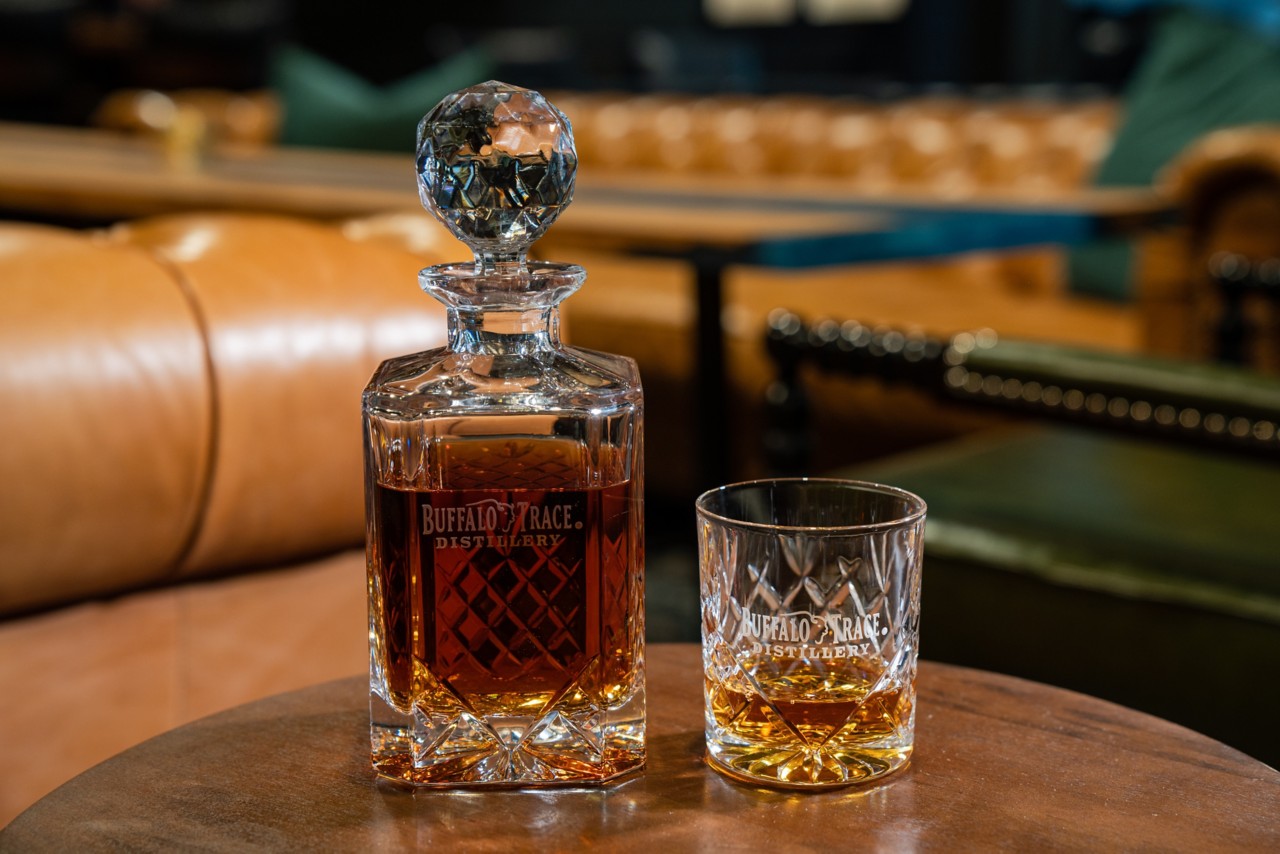
Light bronze in color with streaks of gold, Buffalo Trace Kentucky Straight Bourbon Whiskey bears a complex aroma of vanilla, mint, and molasses. Its taste is pleasantly sweet and contains notes of brown sugar and spice that give way to oak and leather. The long and dry finish has significant depth. When enjoyed with water, flavors of toffee, dark fruit and anise are revealed.
Technical Facts
Spirit Type: Bourbon
Region of Origin: Franklin County, Kentucky
Recipe: Corn, Rye, and Barley. Exact specification is proprietary.
Corn: Kentucky and Indiana
Rye: North Dakota, South Dakota and Minnesota
Barley: North Dakota, South Dakota and Minnesota
Milling Screen: #10
Water: Kentucky limestone with reverse osmosis process
Distillation: Double distilled using a beer still and a doubler
Barrel-Entry Proof: 125
Barrel Size: 53 liquid gallons; 66.25 original proof gallons
Evaporation Loss During Maturation: Approximately 33%
Barrel Selection: 25-30 barrels
Proof: 90
Alcohol Content: 45% (ABV)
For a complete explanation of how Buffalo Trace is crafted go to our Distillaton Process page.